Buy business-card.eu ?
We are moving the project
business-card.eu .
Are you interested in purchasing the domain
business-card.eu ?
domain@kv-gmbh.de · 0541-91531010
Buy business-card.eu ?
Do you need to be able to draw for communication design, logo design, and web design?
While being able to draw can be a valuable skill for communication design, logo design, and web design, it is not always necessary. Many designers use digital tools and software to create their designs, and being able to sketch or draw by hand is not a requirement. However, having a good understanding of design principles, typography, color theory, and layout is essential for all three disciplines. Additionally, being able to effectively communicate ideas and concepts visually is more important than being able to draw realistically. **
How do I design a logo for business cards?
When designing a logo for business cards, it's important to keep in mind that the logo should be simple, versatile, and easily recognizable. Start by brainstorming ideas and concepts that represent your business and its values. Then, sketch out some rough designs and choose a color scheme that reflects your brand. Once you have a few options, seek feedback from colleagues or friends to help you narrow down the choices. Finally, make sure the logo is scalable and looks good in both color and black and white, as it will be printed on business cards. **


Similar search terms for AMiO-04088-Resistance
Top-Angebote
Products related to AMiO-04088-Resistance:


-
What is the difference between resistance and specific resistance?
Resistance is the opposition to the flow of electric current in a material, measured in ohms. It is a property of the material itself. Specific resistance, also known as resistivity, is a material property that quantifies how strongly a material opposes the flow of electric current. It is a characteristic of the material's composition and is used to calculate the resistance of a specific shape and size of material. **
-
What does the internal resistance of the network provide information about?
The internal resistance of a network provides information about the overall efficiency and performance of the network. It can indicate how much energy is lost as heat within the network, and can also provide insight into the stability and reliability of the network. Additionally, the internal resistance can help in determining the maximum power that can be delivered to a load, and can be used to optimize the design and operation of the network. **
-
What are the tolerances for resistance chains and resistance cubes?
The tolerances for resistance chains and resistance cubes typically vary depending on the manufacturer and the specific product. However, in general, resistance chains and cubes are designed to have tight tolerances to ensure accurate and consistent resistance levels for users. It is common for resistance chains and cubes to have tolerances within a few percentage points to maintain their effectiveness and reliability during workouts. It is recommended to refer to the product specifications provided by the manufacturer for more detailed information on the tolerances of specific resistance chains and cubes. **
-
What is the difference between electrical resistance and specific resistance?
Electrical resistance is the opposition to the flow of electric current in a material, measured in ohms. It is a property of the material itself and is dependent on factors such as the material's dimensions and temperature. Specific resistance, on the other hand, is a material property that quantifies how much a material resists the flow of electric current compared to a standard material. It is also known as resistivity and is measured in ohm-meters. In essence, electrical resistance is the overall resistance of a material, while specific resistance is a more intrinsic property of the material itself. **

How do I calculate the resistance with the internal resistance?
To calculate the total resistance with the internal resistance, you can use the formula: R_total = R_internal + R_external, where R_total is the total resistance, R_internal is the internal resistance, and R_external is the external resistance. This formula takes into account the resistance from both the internal and external components of the circuit. By adding the internal and external resistances together, you can determine the total resistance in the circuit. **
Is the protective resistance the same as the series resistance?
No, the protective resistance is not the same as the series resistance. The protective resistance is a component used to limit the current in a circuit and protect other components from damage. It is typically used in parallel with the component it is protecting. On the other hand, the series resistance is a component that is connected in series with other components in a circuit, affecting the overall resistance and current flow in the circuit. While both resistances are used to control current, they serve different purposes and are connected in different ways within a circuit. **
Top-Angebote
Products related to AMiO-04088-Resistance:
-
Do you need to be able to draw for communication design, logo design, and web design?
While being able to draw can be a valuable skill for communication design, logo design, and web design, it is not always necessary. Many designers use digital tools and software to create their designs, and being able to sketch or draw by hand is not a requirement. However, having a good understanding of design principles, typography, color theory, and layout is essential for all three disciplines. Additionally, being able to effectively communicate ideas and concepts visually is more important than being able to draw realistically. **
-
How do I design a logo for business cards?
When designing a logo for business cards, it's important to keep in mind that the logo should be simple, versatile, and easily recognizable. Start by brainstorming ideas and concepts that represent your business and its values. Then, sketch out some rough designs and choose a color scheme that reflects your brand. Once you have a few options, seek feedback from colleagues or friends to help you narrow down the choices. Finally, make sure the logo is scalable and looks good in both color and black and white, as it will be printed on business cards. **
-
What is the difference between resistance and specific resistance?
Resistance is the opposition to the flow of electric current in a material, measured in ohms. It is a property of the material itself. Specific resistance, also known as resistivity, is a material property that quantifies how strongly a material opposes the flow of electric current. It is a characteristic of the material's composition and is used to calculate the resistance of a specific shape and size of material. **
-
What does the internal resistance of the network provide information about?
The internal resistance of a network provides information about the overall efficiency and performance of the network. It can indicate how much energy is lost as heat within the network, and can also provide insight into the stability and reliability of the network. Additionally, the internal resistance can help in determining the maximum power that can be delivered to a load, and can be used to optimize the design and operation of the network. **
Similar search terms for AMiO-04088-Resistance
-
AMiO 04807 CutterQuantity Unit: Kit; Quantity: 10; Housing material: ABS (Acrylonitrile-Butadiene-Styrene Copolymerisate); Blade Length [mm]: 100; Blade Thickness [mm]: 18, 0,5; Tool handle type: Ergonomically Shaped Handle; Blade material: Steel6,29 £*Shipping: 8,45 £Secure redirect to the provider
-
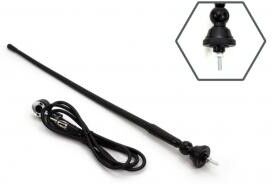
AMiO 01049 AerialLength [cm]: 34; Cable Length [m]: 1.4; Fitted Diameter [mm]: 5; Operating Mode: Electric; Aerial Type: Radio/ Cellphone, Flagpole; Version: ANT 02; Supplementary Article / Supplementary Info Info 2: with bolts; Number of Parts [parts]: 2; Material: Elastomer; Fitting Position: outer; Quantity Unit: Piece; Type: roof mounted6,99 £*Shipping: 8,45 £Secure redirect to the provider
-
What are the tolerances for resistance chains and resistance cubes?
The tolerances for resistance chains and resistance cubes typically vary depending on the manufacturer and the specific product. However, in general, resistance chains and cubes are designed to have tight tolerances to ensure accurate and consistent resistance levels for users. It is common for resistance chains and cubes to have tolerances within a few percentage points to maintain their effectiveness and reliability during workouts. It is recommended to refer to the product specifications provided by the manufacturer for more detailed information on the tolerances of specific resistance chains and cubes. **
-
What is the difference between electrical resistance and specific resistance?
Electrical resistance is the opposition to the flow of electric current in a material, measured in ohms. It is a property of the material itself and is dependent on factors such as the material's dimensions and temperature. Specific resistance, on the other hand, is a material property that quantifies how much a material resists the flow of electric current compared to a standard material. It is also known as resistivity and is measured in ohm-meters. In essence, electrical resistance is the overall resistance of a material, while specific resistance is a more intrinsic property of the material itself. **
-
How do I calculate the resistance with the internal resistance?
To calculate the total resistance with the internal resistance, you can use the formula: R_total = R_internal + R_external, where R_total is the total resistance, R_internal is the internal resistance, and R_external is the external resistance. This formula takes into account the resistance from both the internal and external components of the circuit. By adding the internal and external resistances together, you can determine the total resistance in the circuit. **
-
Is the protective resistance the same as the series resistance?
No, the protective resistance is not the same as the series resistance. The protective resistance is a component used to limit the current in a circuit and protect other components from damage. It is typically used in parallel with the component it is protecting. On the other hand, the series resistance is a component that is connected in series with other components in a circuit, affecting the overall resistance and current flow in the circuit. While both resistances are used to control current, they serve different purposes and are connected in different ways within a circuit. **
* All prices are inclusive of VAT and, if applicable, plus shipping costs. The offer information is based on the details provided by the respective shop and is updated through automated processes. Real-time updates do not occur, so deviations can occur in individual cases. ** Note: Parts of this content were created by AI.