Buy business-card.eu ?
We are moving the project
business-card.eu .
Are you interested in purchasing the domain
business-card.eu ?
domain@kv-gmbh.de · 0541-91531010
Buy business-card.eu ?
Is it competitive or non-competitive inhibition?
It is non-competitive inhibition. This is because the inhibitor binds to an allosteric site on the enzyme, which is different from the active site where the substrate binds. This type of inhibition does not compete with the substrate for binding to the enzyme, hence the name non-competitive inhibition. **
Non-competitive inhibition, right?
Non-competitive inhibition is a type of enzyme inhibition where the inhibitor binds to a site on the enzyme that is not the active site. This binding causes a conformational change in the enzyme, making it less effective at catalyzing the reaction. Non-competitive inhibitors do not compete with the substrate for binding to the enzyme. Instead, they can bind to the enzyme-substrate complex or to a separate allosteric site on the enzyme. **


Similar search terms for Non-competitive
Top-Angebote
Products related to Non-competitive:
-
Testo 745 Non-Contact Voltage TesterThe Testo 745 Non-contact Voltage Tester is the perfect tool for fast initial checks of suspected electrical faults. Designed with advanced features to ensure accuracy and safety, it filters high-frequency interference signals and offers a two-stage sensitivity setting. This tester quickly detects AC voltage in systems up to 1000 VAC, making it a reliable choice for HVAC professionals. Key Features Fast Voltage Detection: Quickly checks for the presence of voltage in AC-powered systems. High Sensitivity: Two-stage sensitivity setting to cater to different testing needs. Safe Operation: Detects voltage up to 1000 VAC safely. Clear Indications: Flashing RED LEDs an30,60 £*Shipping: 5,00 £Secure redirect to the provider
-
All Categories Goods Premium Wooden Chess Clock Timer Classic Mechanical Chess Clock For Competitive Play & Home Games Premium Wooden Chess Clock Timer Classic Mechanical Chess Clock For Competitive Play & Home GamesTurn every match into a memorable showdown with this timeless chess clock timer, crafted for both serious players and casual game nights. Whether youre practicing strategy or competing with friends, its classic mechanical design brings reliable...99,97 $*Shipping: 0,00 $Secure redirect to the provider
-
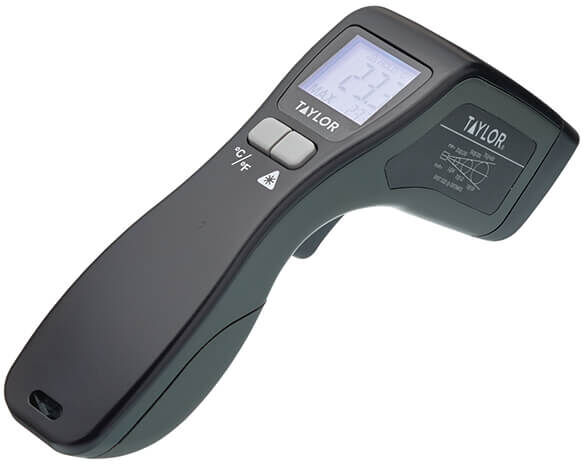
Taylor Pro Non-Contact Infrared Digital ThermometerThe Taylor Pro Digital Non-Contact Infrared Thermometer is a safe and hygienic way to take accurate temperature readings in an instant. Using infrared technology, this digital thermometer reduces the risk of cross food contamination as it doesn't have to come into contact with food. A quick squeeze of the trigger and this this thermometer will instantly provide a reading - from -45°C to 400°C (-49°F to 752°F). This infrared thermometer is particularly good for liquid recipes for which temperature is key, such as caramel, melted chocolate, sauces, syrups and soups. It can also be used to check if woks, pans and griddles are hot enough for frying, searing and sauteing, reducing the risk of scalds and burns. The Taylor Pro Digital Non-Contact Infrared Thermometer requires 2x AAA batteries (not supplied) and measures 10cm x 4cm x 15cm.39,99 £*Shipping: 3,50 £Secure redirect to the provider
-
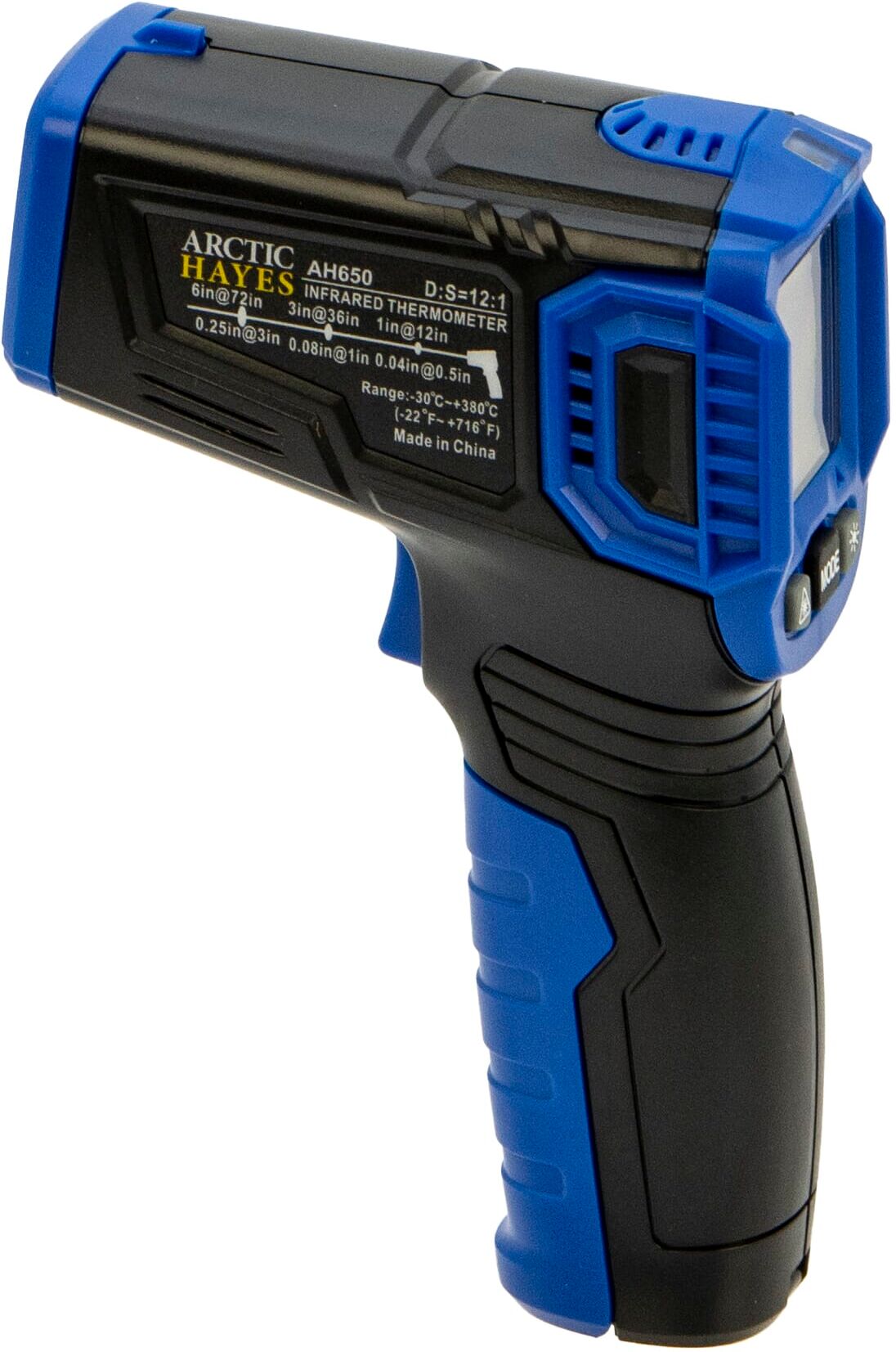
Arctic Hayes Infrared Digital Thermometer – Non-ContactArctic Hayes Infrared Digital Thermometer – Non-Contact (AH650) The Arctic Hayes Infrared Digital Thermometer is a fast, accurate and reliable tool for measuring temperatures of hard-to-reach surfaces without physical contact. A unique 12-point circular laser targeting system gives precise, clear readings every time. With a temperature range of -30°C to +380°C (-22°F to 716°F), this professional-grade thermometer suits HVAC engineers, plumbers, electricians and general trades. Its bright LCD display, built-in alarms and compact design make it a practical choice for quick diagnostics, safety, accuracy and ease of use. Key Features & Benefits Non-Contact Measurement: Measure temperatures of hard-to-reach surfaces without direct contact. 12-Point Circu43,50 £*Shipping: 5,00 £Secure redirect to the provider


-
What is the difference between competitive and non-competitive inhibition?
Competitive inhibition occurs when a molecule competes with the substrate for the active site of the enzyme, thus reducing the enzyme's ability to bind with the substrate. Non-competitive inhibition, on the other hand, occurs when a molecule binds to a site on the enzyme other than the active site, causing a conformational change in the enzyme that reduces its activity. In competitive inhibition, increasing the substrate concentration can overcome the inhibition, while in non-competitive inhibition, increasing the substrate concentration does not alleviate the inhibition. **
-
Is non-competitive inhibition irreversible or reversible?
Non-competitive inhibition is a type of enzyme inhibition that is reversible. In non-competitive inhibition, the inhibitor binds to the enzyme at a site other than the active site, causing a conformational change in the enzyme that reduces its activity. This type of inhibition can be overcome by increasing the substrate concentration, as it does not involve permanent alteration of the enzyme. **
-
What is an example of non-competitive inhibition?
An example of non-competitive inhibition is the binding of an allosteric inhibitor to an enzyme at a site other than the active site. This binding causes a conformational change in the enzyme, which reduces its activity and prevents the substrate from binding to the active site. This type of inhibition does not compete with the substrate for binding to the active site, hence the term "non-competitive." An example of this is the binding of ATP to the enzyme phosphofructokinase in glycolysis, which inhibits its activity. **
-
Can you give me an example of competitive and non-competitive inhibition in biology?
Sure! In competitive inhibition, a molecule similar in structure to the substrate competes with the substrate for the active site of the enzyme. This prevents the substrate from binding to the enzyme and carrying out its normal function. An example of this is the drug statins, which competitively inhibit the enzyme HMG-CoA reductase, involved in cholesterol synthesis. In non-competitive inhibition, a molecule binds to the enzyme at a location other than the active site, causing a conformational change in the enzyme that reduces its activity. An example of this is the poison cyanide, which non-competitively inhibits the enzyme cytochrome c oxidase in the electron transport chain, disrupting cellular respiration. **


Is allosteric inhibition the same as non-competitive inhibition?
Allosteric inhibition and non-competitive inhibition are not the same, although they are related. Non-competitive inhibition refers to the binding of an inhibitor to a site on the enzyme that is not the active site, thereby preventing the substrate from binding to the active site. Allosteric inhibition, on the other hand, occurs when an inhibitor binds to a site on the enzyme that is distinct from the active site, causing a conformational change in the enzyme that reduces its activity. While both types of inhibition involve the binding of an inhibitor to a site other than the active site, allosteric inhibition specifically involves a change in the enzyme's shape and activity. **
What is the difference between non-competitive and allosteric inhibition?
Non-competitive inhibition occurs when an inhibitor binds to an enzyme at a site other than the active site, causing a conformational change that prevents the substrate from binding. This type of inhibition is not affected by the concentration of the substrate. On the other hand, allosteric inhibition occurs when an inhibitor binds to an allosteric site on the enzyme, causing a conformational change that reduces the enzyme's activity. Allosteric inhibition is often reversible and can be overcome by increasing the concentration of the substrate. **
Top-Angebote
Products related to Non-competitive:
-
Uplifted Finds Luxury Backlit Custom Business Logo Sign custom Contact UsMake an unforgettable first impression with our Premium Backlit Metal Business Sign. Designed for highend automotive centers, beauty salons, medical clinics, and luxury boutiques, this professionalgrade signage combines precisioncut metal with...208,97 $*Shipping: 0,00 $Secure redirect to the provider
-
Arctic Hayes Non-Contact Voltage DetectorArctic Hayes Non-Contact Voltage Detector – 12–1000V AC CAT III 1000V Double Insulated The Arctic Hayes AH12 is a non-contact voltage detector for quickly identifying live AC circuits without needing to touch the conductor. It detects voltage from 12V to 1000V AC at 50/60Hz, giving a red LED flash and an audible alarm together when voltage is present, so it's usable in both bright and low-light conditions and where background noise might make an audible-only signal easy to miss. The body is double insulated for additional protection when working near live circuits, and it's rated CAT III 1000V, the correct category for fixed electrical installations such as distribution boards, fixed wiring, motors and industrial equipment. It also includes a built-in flashlight function for checking connections in poorly lit spaces. Compact and light13,32 £*Shipping: 5,00 £Secure redirect to the provider
-
Testo 745 Non-Contact Voltage TesterThe Testo 745 Non-contact Voltage Tester is the perfect tool for fast initial checks of suspected electrical faults. Designed with advanced features to ensure accuracy and safety, it filters high-frequency interference signals and offers a two-stage sensitivity setting. This tester quickly detects AC voltage in systems up to 1000 VAC, making it a reliable choice for HVAC professionals. Key Features Fast Voltage Detection: Quickly checks for the presence of voltage in AC-powered systems. High Sensitivity: Two-stage sensitivity setting to cater to different testing needs. Safe Operation: Detects voltage up to 1000 VAC safely. Clear Indications: Flashing RED LEDs an30,60 £*Shipping: 5,00 £Secure redirect to the provider
-
All Categories Goods Premium Wooden Chess Clock Timer Classic Mechanical Chess Clock For Competitive Play & Home Games Premium Wooden Chess Clock Timer Classic Mechanical Chess Clock For Competitive Play & Home GamesTurn every match into a memorable showdown with this timeless chess clock timer, crafted for both serious players and casual game nights. Whether youre practicing strategy or competing with friends, its classic mechanical design brings reliable...99,97 $*Shipping: 0,00 $Secure redirect to the provider
-
Is it competitive or non-competitive inhibition?
It is non-competitive inhibition. This is because the inhibitor binds to an allosteric site on the enzyme, which is different from the active site where the substrate binds. This type of inhibition does not compete with the substrate for binding to the enzyme, hence the name non-competitive inhibition. **
-
Non-competitive inhibition, right?
Non-competitive inhibition is a type of enzyme inhibition where the inhibitor binds to a site on the enzyme that is not the active site. This binding causes a conformational change in the enzyme, making it less effective at catalyzing the reaction. Non-competitive inhibitors do not compete with the substrate for binding to the enzyme. Instead, they can bind to the enzyme-substrate complex or to a separate allosteric site on the enzyme. **
-
What is the difference between competitive and non-competitive inhibition?
Competitive inhibition occurs when a molecule competes with the substrate for the active site of the enzyme, thus reducing the enzyme's ability to bind with the substrate. Non-competitive inhibition, on the other hand, occurs when a molecule binds to a site on the enzyme other than the active site, causing a conformational change in the enzyme that reduces its activity. In competitive inhibition, increasing the substrate concentration can overcome the inhibition, while in non-competitive inhibition, increasing the substrate concentration does not alleviate the inhibition. **
-
Is non-competitive inhibition irreversible or reversible?
Non-competitive inhibition is a type of enzyme inhibition that is reversible. In non-competitive inhibition, the inhibitor binds to the enzyme at a site other than the active site, causing a conformational change in the enzyme that reduces its activity. This type of inhibition can be overcome by increasing the substrate concentration, as it does not involve permanent alteration of the enzyme. **
Similar search terms for Non-competitive
-
Taylor Pro Non-Contact Infrared Digital ThermometerThe Taylor Pro Digital Non-Contact Infrared Thermometer is a safe and hygienic way to take accurate temperature readings in an instant. Using infrared technology, this digital thermometer reduces the risk of cross food contamination as it doesn't have to come into contact with food. A quick squeeze of the trigger and this this thermometer will instantly provide a reading - from -45°C to 400°C (-49°F to 752°F). This infrared thermometer is particularly good for liquid recipes for which temperature is key, such as caramel, melted chocolate, sauces, syrups and soups. It can also be used to check if woks, pans and griddles are hot enough for frying, searing and sauteing, reducing the risk of scalds and burns. The Taylor Pro Digital Non-Contact Infrared Thermometer requires 2x AAA batteries (not supplied) and measures 10cm x 4cm x 15cm.39,99 £*Shipping: 3,50 £Secure redirect to the provider
-
Arctic Hayes Infrared Digital Thermometer – Non-ContactArctic Hayes Infrared Digital Thermometer – Non-Contact (AH650) The Arctic Hayes Infrared Digital Thermometer is a fast, accurate and reliable tool for measuring temperatures of hard-to-reach surfaces without physical contact. A unique 12-point circular laser targeting system gives precise, clear readings every time. With a temperature range of -30°C to +380°C (-22°F to 716°F), this professional-grade thermometer suits HVAC engineers, plumbers, electricians and general trades. Its bright LCD display, built-in alarms and compact design make it a practical choice for quick diagnostics, safety, accuracy and ease of use. Key Features & Benefits Non-Contact Measurement: Measure temperatures of hard-to-reach surfaces without direct contact. 12-Point Circu43,50 £*Shipping: 5,00 £Secure redirect to the provider
-
Happy Pet Pantry Non Contact Pet Ear Thermometer For Dogs & Cats Digital Veterinary Fever Monitor Non Contact Pet Ear Thermometer For Dogs & Cats Digital Veterinary Fever MonitorWhen your pet feels unwell, every second of uncertainty feels overwhelmingquick, accurate temperature checks can bring peace of mind. This pet ear thermometer is designed to deliver fast and reliable readings for dogs, cats, and puppies without...34,97 $*Shipping: 0,00 $Secure redirect to the provider
-
GreenPan Elite Non-Stick 3-in-1 Contact Grill & Indoor BBQ BlackJust because summer is over, it doesn’t mean barbecue season is as well! With Non-Stick 3-in-1 Contact Grill, you can bring the BBQ indoors, and keep on enjoying that hot-off-the-grill taste of your favourite meat and veg. And it’s not just all about the Barbie – thanks to its interchangeable plates, you can also use it to fry, grill, and as a panini press, so that’s breakfast, lunch and dinner sorted, all in one machine. Versatile cooking There are so many ways to use this Contact Grill, you’ll always be finding new ways to cook your favourite foods on it, but the three main ways are: as an indoor BBQ, as a contact grill, and to fry meat and vegetables and sear food at a high temperature to lock in the flavour. As well as a conventional grill that can be closed to cook foods like juicy chicken breasts or filling-stuffed paninis, it can be opened up and laid flat to use as a hot plate for grilling and searing meats, frying eggs for breakfast, or even making pancakes. It’s even clever enough to have independent settings for the top and bottom plates, so you can set separate temperatures and cooking times for the upper and lower plates, or select the same for both, to give you even more choice and control over your cooking. Removable and reversible plates On the two grill plates you’ll find a flat side for frying and searing and a griddle plate on the other for grilling and getting those authentic grill lines on your food. And because the plates can be easily removed and changed, you can choose to have a griddle plate on one side and a flat plate on the other, so it’s perfect for cooking different foods at once – full English, anyone? And when the weather calls off your outdoor barbecue plans, all you’ll need to do is pull out your Contact Grill and bring the party inside. Using the griddle plate, you can cook all your favourite BBQ chow from sausages, burgers and skewers of veg, as well as using the flat plate to sear juicy steaks and fillets of salmon in a sweet chili glaze. And with the Sear button to give you a quick temperature boost, you’ll get them cooked and ready to eat in less than ten minutes. We know it’s not all party, party, party all the time, so when you need a quick lunchtime option, it’ll grill a chicken breast in less than ten minutes or a panini in five. And it has four adjustable height settings, so you really can go overboard with all your favourite fillings. Easy to use and store With simple-to-use knobs to control the time and temperature for the upper and lower plates, the easy to read LCD display lets you check your settings for both plates at a glance so you’re in control at all times. The dishwasher safe plates are easy to remove and clean and also have a PFAS-free, Thermolon non-stick coating, so there’ll be no nasty chemicals released during cooking. And the tough, ceramic coating is safe to use with metal utensils. When everyone’s fed and watered, it can be locked shut and stored vertically, taking up minimal cupboard...229,99 £*Shipping: 0,00 £Secure redirect to the provider
-
What is an example of non-competitive inhibition?
An example of non-competitive inhibition is the binding of an allosteric inhibitor to an enzyme at a site other than the active site. This binding causes a conformational change in the enzyme, which reduces its activity and prevents the substrate from binding to the active site. This type of inhibition does not compete with the substrate for binding to the active site, hence the term "non-competitive." An example of this is the binding of ATP to the enzyme phosphofructokinase in glycolysis, which inhibits its activity. **
-
Can you give me an example of competitive and non-competitive inhibition in biology?
Sure! In competitive inhibition, a molecule similar in structure to the substrate competes with the substrate for the active site of the enzyme. This prevents the substrate from binding to the enzyme and carrying out its normal function. An example of this is the drug statins, which competitively inhibit the enzyme HMG-CoA reductase, involved in cholesterol synthesis. In non-competitive inhibition, a molecule binds to the enzyme at a location other than the active site, causing a conformational change in the enzyme that reduces its activity. An example of this is the poison cyanide, which non-competitively inhibits the enzyme cytochrome c oxidase in the electron transport chain, disrupting cellular respiration. **
-
Is allosteric inhibition the same as non-competitive inhibition?
Allosteric inhibition and non-competitive inhibition are not the same, although they are related. Non-competitive inhibition refers to the binding of an inhibitor to a site on the enzyme that is not the active site, thereby preventing the substrate from binding to the active site. Allosteric inhibition, on the other hand, occurs when an inhibitor binds to a site on the enzyme that is distinct from the active site, causing a conformational change in the enzyme that reduces its activity. While both types of inhibition involve the binding of an inhibitor to a site other than the active site, allosteric inhibition specifically involves a change in the enzyme's shape and activity. **
-
What is the difference between non-competitive and allosteric inhibition?
Non-competitive inhibition occurs when an inhibitor binds to an enzyme at a site other than the active site, causing a conformational change that prevents the substrate from binding. This type of inhibition is not affected by the concentration of the substrate. On the other hand, allosteric inhibition occurs when an inhibitor binds to an allosteric site on the enzyme, causing a conformational change that reduces the enzyme's activity. Allosteric inhibition is often reversible and can be overcome by increasing the concentration of the substrate. **
* All prices are inclusive of VAT and, if applicable, plus shipping costs. The offer information is based on the details provided by the respective shop and is updated through automated processes. Real-time updates do not occur, so deviations can occur in individual cases. ** Note: Parts of this content were created by AI.